Accent vs Ascent vs Assent: Learn the Difference Fast with Clear Examples to Write Better

Accent vs Ascent vs Assent

Have you ever paused while writing because you weren’t sure whether to use accent, ascent, or assent? You’re not alone. These three words sound almost identical, yet they have completely different meanings. Because they are homophones (words that sound alike but have different meanings and spellings), they often confuse students, writers, professionals, and even native … Read more


Envolved or Involved: Which Is Correct? Learn the Difference Fast

Envolved or Involved

Have you ever typed “envolved” and wondered whether it was a real English word? You’re not alone. Many English learners, students, and even native speakers occasionally confuse envolved and involved because they sound similar when spoken quickly. Spell-checkers often catch the mistake, but understanding why it is incorrect helps you become a more confident writer. … Read more

In the Street or On the Street? Learn the Difference Fast with Clear Examples to Write Better

In the Street or On the Street?

Have you ever wondered whether you should say “in the street” or “on the street”? You’re not alone. Many English learners—and even native speakers—get confused because both expressions seem similar. However, each one has its own meaning and is used in different situations. Understanding the difference is important for everyday conversations, school assignments, English exams, … Read more

Propose vs Purpose: Learn the Difference Fast with Clear Examples to Write Better

Propose vs Purpose

Introduction Many English learners often get confused between “propose” and “purpose” because both words sound slightly formal and are sometimes used in similar academic or professional contexts. However, their meanings are completely different, and mixing them up can change the entire meaning of a sentence. This confusion happens because both words are commonly used in … Read more

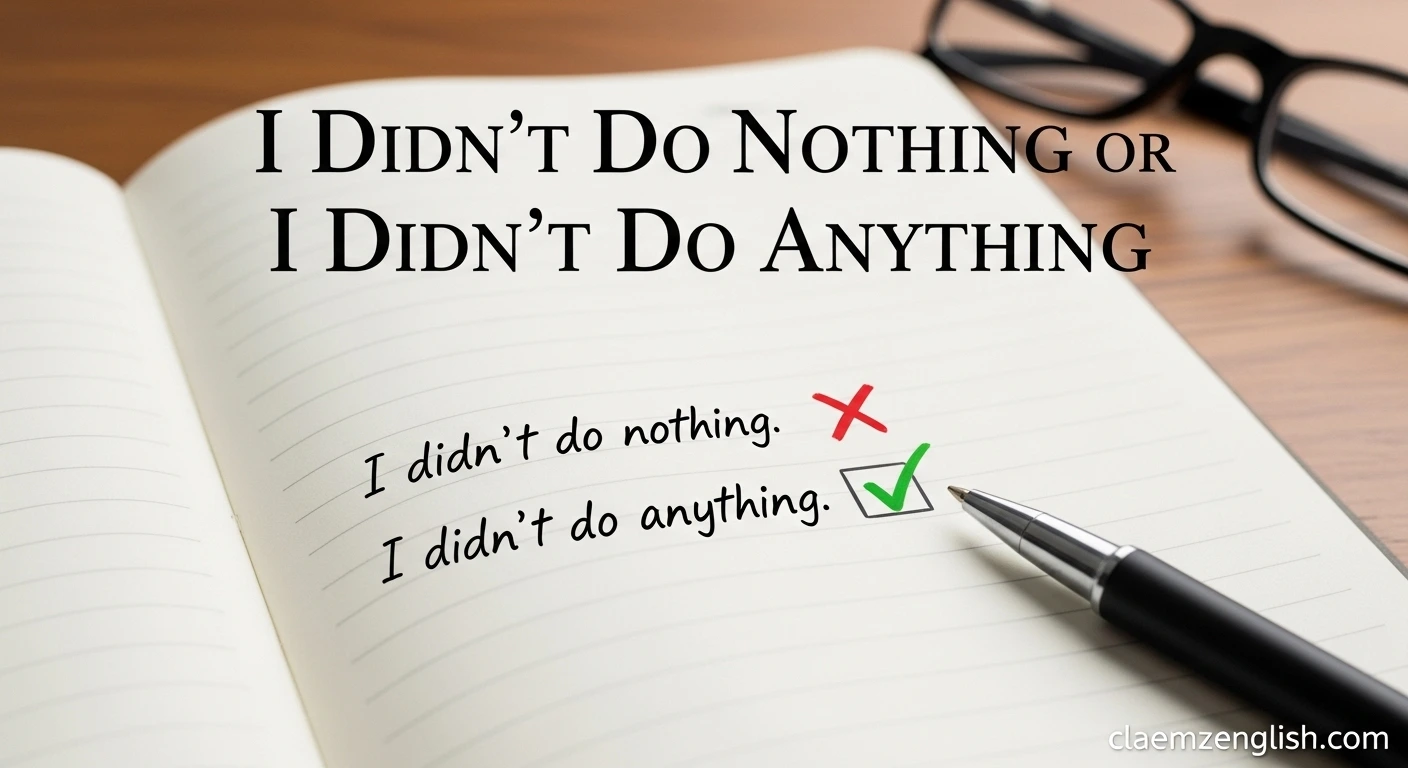
I Didn’t Do Nothing or I Didn’t Do Anything – Learn the Difference Fast With Clear Examples to Write Better

I Didn’t Do Nothing or I Didn’t Do Anything

Introduction Many English learners, students, and even native speakers often get confused between phrases like “I didn’t do nothing” and “I didn’t do anything.” At first glance, both may sound similar in casual speech, but only one is grammatically correct in standard English. This confusion happens because of something called double negatives, which are common … Read more

Passerby, Passersby or Passerbyers: Correct Spelling, Meaning, and Usage Explained

Passerby, Passersby or Passerbyers

Many English learners get confused when they see words like “passerby,” “passersby,” and sometimes even the incorrect form “passerbyers.” These variations look similar, but only one or two are actually correct in standard English. This confusion is common because English has unusual plural rules, especially for compound words. Knowing the correct form matters in writing … Read more