
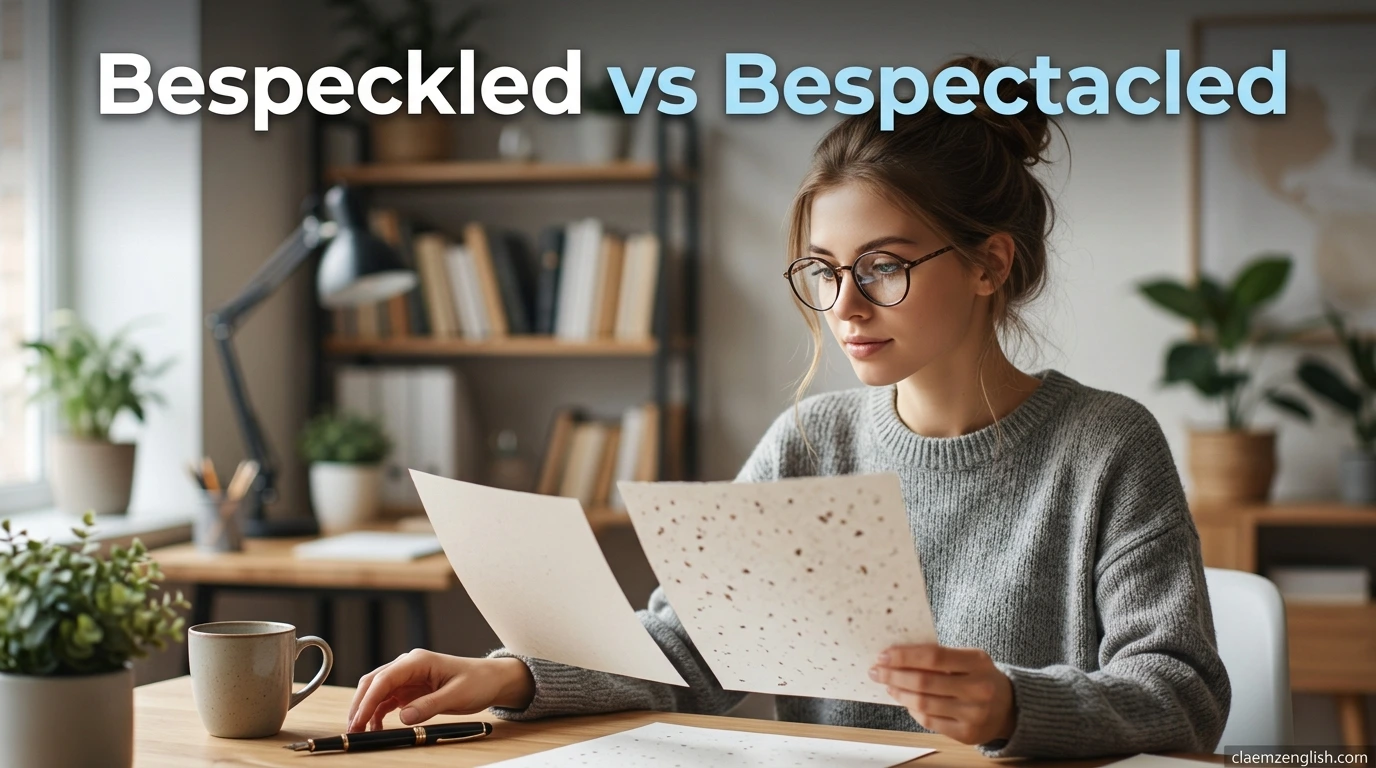
Have you ever come across the words bespeckled and bespectacled and wondered whether they mean the same thing? You’re not alone. These two words look and sound somewhat similar, which causes many English learners, students, and even native speakers to mix them up.
Understanding the difference matters because using the wrong word can change the meaning of your sentence entirely. Whether you’re writing an essay, preparing for an exam, creating professional content, or simply improving your vocabulary, knowing when to use bespeckled and bespectacled will make your English more accurate and polished.
In this guide, you’ll learn the meanings, spelling differences, pronunciation, grammar rules, usage examples, common mistakes, and practical tips to remember the distinction forever.
What Do Bespeckled and Bespectacled Mean?
Although these words appear related, they describe completely different things.
Bespeckled Meaning
Bespeckled means covered with small spots, specks, marks, or dots.
The word comes from speckle, which refers to tiny spots or flecks on a surface.
Examples:
- The bird had bespeckled wings.
- Her dress was bespeckled with paint.
- The window was bespeckled with raindrops.
In each example, something is covered with small spots.
Bespectacled Meaning
Bespectacled means wearing spectacles or glasses.
The word comes from spectacles, an older term for eyeglasses.
Examples:
- The bespectacled professor entered the classroom.
- A bespectacled man sat reading a newspaper.
- The detective interviewed a bespectacled witness.
In these examples, the person is wearing glasses.
Quick Comparison: Bespeckled vs Bespectacled
| Feature | Bespeckled | Bespectacled |
| Meaning | Covered with small spots or specks | Wearing glasses |
| Related Word | Speckle | Spectacles |
| Usually Describes | Objects, animals, surfaces | People |
| Common Context | Paint, dirt, raindrops, patterns | Appearance, people |
| Part of Speech | Adjective | Adjective |
Easy Memory Trick
- Bespeckled = Specks
- Bespectacled = Spectacles (glasses)
If you remember the root words, you’ll rarely confuse them.
Why People Confuse These Words
Several factors contribute to the confusion.
Similar Appearance
Both words:
- Start with be-
- End with -ed
- Have nearly identical spelling patterns
- Are relatively uncommon in everyday conversation
Similar Pronunciation
When spoken quickly, the middle sounds can seem similar, especially for English learners.
Rare Vocabulary
Unlike common words such as “glasses” or “spotted,” these terms appear more often in:
- Literature
- Academic writing
- Journalism
- Descriptive narratives
As a result, many people encounter them less frequently and may guess their meanings incorrectly.
Spelling Differences Explained
The easiest way to distinguish these words is by focusing on their roots.
| Word | Root Word | Meaning of Root |
| Bespeckled | Speckle | Small spot or mark |
| Bespectacled | Spectacles | Glasses |
| Speck | Tiny dot or spot | Mark |
| Spectacles | Eyeglasses | Vision aid |
Notice the key difference:
Bespeckled
Contains:
Speck
Think:
- Specks of dust
- Specks of paint
- Specks of dirt
Bespectacled
Contains:
Spectac
Think:
- Spectacles
- Glasses
- Eyewear
Visual Reminder
✔ Bespeckled → Specks
✔ Bespectacled → Spectacles
This simple connection helps many learners remember the difference instantly.
Correct Usage in English Grammar
Both words function as adjectives.
They modify nouns by describing them.
Bespeckled as an Adjective
Correct:
- The bespeckled wall needed repainting.
- A bespeckled butterfly landed nearby.
- The car was bespeckled with mud.
Incorrect:
- The man was bespeckled because he wore glasses.
Why wrong?
Bespeckled does not mean wearing glasses.
Bespectacled as an Adjective
Correct:
- The bespectacled librarian smiled politely.
- A bespectacled student asked a question.
- The bespectacled scientist presented her research.
Incorrect:
- The bespectacled wall was covered with paint.
Why wrong?
Walls cannot wear glasses.
Sentence Examples for Better Understanding
Let’s compare both words side by side.
| Bespeckled | Bespectacled |
| The leaves were bespeckled with snow. | The bespectacled teacher greeted the class. |
| Her shoes were bespeckled with mud. | A bespectacled customer entered the store. |
| The sky was bespeckled with stars. | The bespectacled author signed books. |
| The fabric was bespeckled with colorful dots. | The bespectacled lawyer reviewed the contract. |
| The puppy was bespeckled with black spots. | The bespectacled doctor examined the patient. |
Notice the pattern:
- Bespeckled describes surfaces, objects, animals, or things with spots.
- Bespectacled describes people who wear glasses.
Pronunciation Guide
Correct pronunciation can also help you avoid mistakes.
Bespeckled
Pronunciation:
/bɪˈspɛkəld/
Sounds like:
bih-SPEK-uld
Focus on:
SPEK
which reminds you of specks.
Bespectacled
Pronunciation:
/bɪˈspɛktəkəld/
Sounds like:
bih-SPEK-tuh-kuld
Notice the extra syllable from spectacles.
Pronunciation Comparison
| Word | Approximate Pronunciation |
| Bespeckled | bih-SPEK-uld |
| Bespectacled | bih-SPEK-tuh-kuld |
The longer pronunciation often signals that the word relates to spectacles.
British vs American English Usage
Unlike many English words, the meanings of bespeckled and bespectacled are generally the same in both British and American English.
British English
You may encounter bespectacled more often in:
- Newspapers
- Literature
- Formal descriptions
Example:
- A bespectacled gentleman approached the counter.
American English
Americans understand the word, but often prefer simpler alternatives such as:
- Wearing glasses
- Glasses-wearing
- Person with glasses
Example:
Instead of:
- The bespectacled man arrived.
Many Americans might say:
- The man wearing glasses arrived.
Usage Comparison
| Expression | British English | American English |
| Bespectacled man | Common | Less common |
| Man wearing glasses | Common | Very common |
| Bespeckled fabric | Common | Common |
| Spotted fabric | More common in everyday speech | More common in everyday speech |
The meanings remain identical regardless of region.
Common Mistakes and How to Avoid Them
Many learners make predictable errors with these words.
Mistake 1: Using Bespeckled for Someone Wearing Glasses
❌ Incorrect:
- The bespeckled student raised his hand.
✔ Correct:
- The bespectacled student raised his hand.
Mistake 2: Using Bespectacled for Spotted Objects
❌ Incorrect:
- The bespectacled wall was covered with paint marks.
✔ Correct:
- The bespeckled wall was covered with paint marks.
Mistake 3: Assuming the Words Are Synonyms
❌ Incorrect thinking:
- Bespeckled and bespectacled mean the same thing.
✔ Correct understanding:
- Bespeckled = covered with spots.
- Bespectacled = wearing glasses.
Mistake 4: Misspelling Bespectacled
Common incorrect spellings:
❌ Bespectled
❌ Bespectacaled
❌ Bespecticled
Correct spelling:
✔ Bespectacled
Mistake 5: Overusing These Words
While both are correct English words, they can sound formal or literary.
Sometimes simpler alternatives work better.
Instead of:
- A bespectacled employee entered the room.
You could write:
- An employee wearing glasses entered the room.
Choose based on your audience and writing style.
Alternative Words and Synonyms
Knowing alternatives can make your writing more natural.
Alternatives for Bespeckled
- Spotted
- Speckled
- Flecked
- Dotted
- Marked
- Mottled
Example:
- The bespeckled bird flew away.
- The speckled bird flew away.
Alternatives for Bespectacled
- Wearing glasses
- Glasses-wearing
- Eyeglass-wearing
- Spectacles-wearing
Example:
- The bespectacled woman smiled.
- The woman wearing glasses smiled.
These alternatives are often more common in modern everyday English.
When Should You Use Bespeckled or Bespectacled?
A simple rule can solve the problem instantly.
Ask yourself:
Is it covered with spots?
If yes, use bespeckled.
Examples:
- Bespeckled leaves
- Bespeckled fabric
- Bespeckled windows
- Bespeckled wings
Is it a person wearing glasses?
If yes, use bespectacled.
Examples:
- Bespectacled teacher
- Bespectacled doctor
- Bespectacled student
- Bespectacled writer
Quick Decision Table
| Question | Use |
| Covered with tiny spots? | Bespeckled |
| Wearing glasses? | Bespectacled |
| Refers to paint, dirt, stars, dots, mud? | Bespeckled |
| Refers to a person with spectacles? | Bespectacled |
FAQs
Is bespectacled a real word?
Yes. Bespectacled is a standard English adjective meaning “wearing glasses.”
Is bespeckled a real word?
Yes. Bespeckled is a standard English adjective meaning “covered with small spots or specks.”
Can a person be bespeckled?
Yes, but only if the person is covered with spots, marks, mud, paint, freckles, or similar specks.
Example:
- The child was bespeckled with mud after playing outside.
Can an object be bespectacled?
No. Objects cannot wear glasses, so bespectacled generally describes people.
Which word is more common?
Bespectacled is usually encountered more often because it appears in descriptions of people in literature, journalism, and formal writing.
Are these words old-fashioned?
They are not incorrect or obsolete, but they sound more formal and literary than everyday alternatives like:
- Wearing glasses
- Speckled
- Spotted
How can I remember the difference quickly?
Use this memory rule:
- Speck → Bespeckled
- Spectacles → Bespectacled
The root word tells you the meaning.
Conclusion
The difference between bespeckled and bespectacled is actually quite simple once you focus on their root words. Bespeckled means covered with tiny spots, specks, or marks, while bespectacled means wearing glasses. Although the words look similar, they describe completely different things and should never be used interchangeably.
To remember them confidently, think “specks” for bespeckled and “spectacles” for bespectacled. If something has spots, choose bespeckled. If a person wears glasses, choose bespectacled. Mastering this distinction will improve your vocabulary, strengthen your grammar skills, and help you write with greater accuracy in school, exams, professional communication, and everyday English.
