
Have you ever come across the phrase “finger in the dike” and wondered what it actually means? Many English learners and even native speakers find this expression confusing because it sounds literal but is usually used figuratively. Understanding idioms like this is important for better reading comprehension, writing, professional communication, and exam success.
The phrase “finger in the dike” has an interesting historical background and is often used to describe a temporary solution to a much larger problem. In this guide, you’ll learn the meaning, correct usage, grammar, pronunciation, examples, common mistakes, and frequently asked questions about this expression. By the end, you’ll be able to use it confidently in everyday English.
What Does “Finger in the Dike” Mean?
The expression “finger in the dike” refers to a temporary action taken to prevent a bigger problem from becoming worse. It suggests that someone is trying to stop a serious issue with a small or insufficient measure.
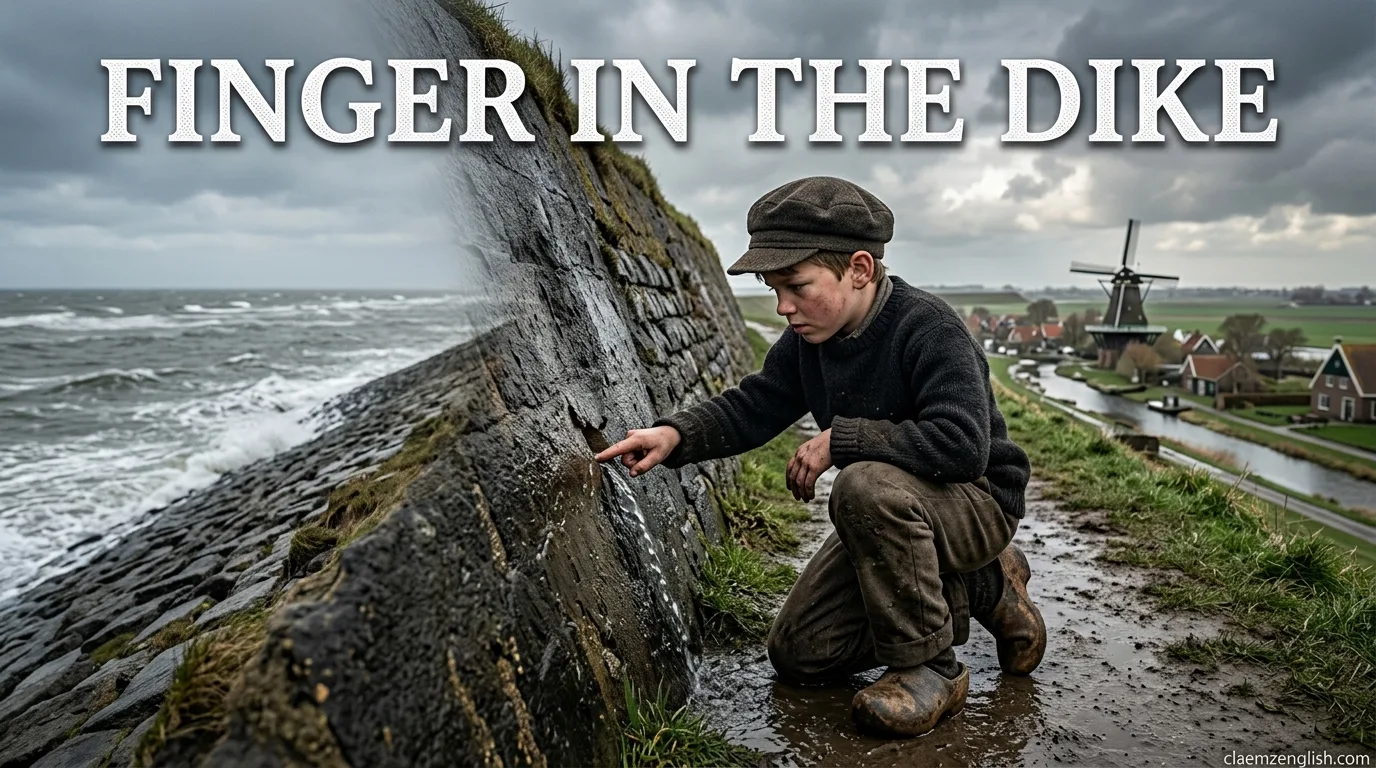
The phrase comes from a famous story about a Dutch boy who supposedly saved his town by placing his finger in a leaking dike (a barrier that holds back water) until help arrived.
Simple Definition
Finger in the dike = A temporary fix for a larger problem.
Quick Examples
- The government’s emergency funding was just a finger in the dike against the economic crisis.
- Adding one more employee is only a finger in the dike when the company needs a complete restructuring.
- The patch fixed the software issue temporarily, but it was merely a finger in the dike.
Origin and History of the Phrase
Understanding the origin helps make the meaning easier to remember.
The expression is linked to the story of Hans Brinker, often mistakenly believed to be a traditional Dutch legend. In the story, a young boy notices a leak in a dike and places his finger into the hole to prevent flooding until adults can repair it.
Although the tale became famous through literature, the phrase evolved into an idiom representing a temporary measure that prevents immediate disaster but does not solve the underlying problem.
Historical Idea Behind the Idiom
| Element | Meaning |
| Finger | Small action |
| Leak in dike | Serious problem |
| Holding back water | Preventing disaster temporarily |
| Permanent repair | Real solution |
The contrast between a tiny action and a huge threat is what gives the idiom its power.
How to Use “Finger in the Dike” Correctly
The phrase is most commonly used when discussing problems that require larger, long-term solutions.
Correct Usage Pattern
Something is a finger in the dike against a larger issue.
Examples:
✅ The tax relief package is a finger in the dike against rising inflation.
✅ Their fundraising efforts were a finger in the dike while they searched for long-term investors.
✅ Rebooting the server was only a finger in the dike, not a real fix.
Situations Where It Fits
- Business challenges
- Economic problems
- Political issues
- Environmental concerns
- Technical problems
- Organizational difficulties
Situations Where It Doesn’t Fit
The phrase should not be used when describing a complete or permanent solution.
❌ The new bridge is a finger in the dike because it permanently solved traffic problems.
✔ The temporary traffic diversion was a finger in the dike until the new bridge opened.
Literal Meaning vs Figurative Meaning
One common source of confusion is the difference between the literal and figurative meanings.
Comparison Table
| Literal Meaning | Figurative Meaning |
| A finger blocking a hole in a dike | A temporary solution |
| Physical action | Symbolic action |
| Stops water leakage | Stops a problem temporarily |
| Emergency measure | Short-term fix |
Example of Literal Use
- The child put his finger in the dike to stop water from leaking.
Example of Figurative Use
- The budget increase was a finger in the dike against the company’s financial troubles.
Today, the figurative meaning is far more common.
Grammar Rules for Using the Expression
Because “finger in the dike” functions as a noun phrase, it usually appears after forms of the verb to be.
Common Structures
Structure 1
Subject + be + a finger in the dike
Examples:
- The subsidy is a finger in the dike.
- The update was a finger in the dike.
Structure 2
Subject + serve as + a finger in the dike
Examples:
- The donation served as a finger in the dike.
- Emergency measures served as a finger in the dike.
Structure 3
Subject + provide + a finger in the dike
Examples:
- The loan provided a finger in the dike against bankruptcy.
- The grant provided a finger in the dike during the crisis.
Plural Form
Although uncommon, you may occasionally see:
- fingers in the dike
This refers to multiple temporary measures.
Example:
- The company introduced several fingers in the dike while developing a recovery plan.
Pronunciation Guide
Many learners struggle with pronunciation when they first encounter the phrase.
Pronunciation
Finger in the dike
/ˈfɪŋɡər ɪn ðə daɪk/
Breakdown
| Word | Pronunciation |
| Finger | FING-ger |
| In | in |
| The | thuh |
| Dike | dyke |
Speaking Tip
The phrase is usually spoken smoothly:
FING-ger in thuh dyke
Practice by repeating:
- It was just a finger in the dike.
- Their solution is a finger in the dike.
- We need more than a finger in the dike.
Similar Expressions and Alternatives
English offers several phrases with a similar meaning.
Common Alternatives
| Expression | Meaning |
| Temporary fix | Short-term solution |
| Stopgap measure | Interim solution |
| Quick fix | Fast but limited solution |
| Band-aid solution | Surface-level remedy |
| Holding action | Delay tactic while preparing a solution |
Examples
Instead of:
- The new policy is a finger in the dike.
You could say:
- The new policy is a stopgap measure.
- The new policy is a temporary fix.
- The new policy is a band-aid solution.
Nuance Difference
“Finger in the dike” often emphasizes the seriousness of the larger problem more strongly than these alternatives.
Common Mistakes and How to Avoid Them
Many English learners misuse this idiom. Here are the most frequent mistakes.
Mistake 1: Using It for Permanent Solutions
❌ The new hospital was a finger in the dike because it solved healthcare shortages permanently.
✔ Temporary medical tents were a finger in the dike until the hospital was completed.
Mistake 2: Assuming It Means a Complete Success
The expression implies limitation.
❌ The plan was a finger in the dike and solved everything.
✔ The plan was a finger in the dike that bought additional time.
Mistake 3: Using It for Small Problems
The idiom works best when the underlying issue is significant.
❌ Finding my pen was a finger in the dike.
✔ Emergency budget cuts were a finger in the dike against mounting debt.
Mistake 4: Confusing “Dike” with Other Words
The word dike refers to a structure that prevents flooding.
Always remember:
- Finger in the dike = leak prevention image
- Temporary action against a larger threat
Correct vs Incorrect Examples
| Incorrect | Correct |
| The permanent repair was a finger in the dike. | The temporary patch was a finger in the dike. |
| It solved everything completely. | It delayed a larger problem. |
| A finger in the dike fixed the issue forever. | A finger in the dike bought more time. |
| It refers to a final solution. | It refers to a temporary solution. |
Real-Life Sentence Examples
Seeing the phrase in context helps build confidence.
Business Examples
- The company’s emergency loan was only a finger in the dike.
- Hiring temporary staff acted as a finger in the dike during the busy season.
- The discount campaign became a finger in the dike against declining sales.
Government and Politics
- The relief package was a finger in the dike against the housing crisis.
- Emergency aid served as a finger in the dike after the disaster.
- The temporary tax cut was merely a finger in the dike.
Technology Examples
- Restarting the system was a finger in the dike.
- The software patch acted as a finger in the dike until developers released a full update.
- Increased server capacity became a finger in the dike during peak traffic.
Education Examples
- Extra tutoring served as a finger in the dike while the school redesigned its curriculum.
- The temporary classroom was a finger in the dike until construction finished.
Everyday Examples
- Borrowing money from friends was a finger in the dike before finding a permanent source of income.
- Using tape on the broken pipe was a finger in the dike until a plumber arrived.
British vs American English Usage
Unlike some grammar topics, there is no major difference between British and American English regarding the meaning of this expression.
Comparison Table
| Feature | British English | American English |
| Meaning | Same | Same |
| Usage | Same | Same |
| Figurative sense | Common | Common |
| Grammar | Same | Same |
| Pronunciation differences | Minimal | Minimal |
However, modern speakers in both varieties may more frequently use alternatives such as:
- stopgap measure
- temporary fix
- band-aid solution
- short-term solution
These expressions may sound more contemporary in everyday conversation.
Frequently Asked Questions
Is “finger in the dike” an idiom?
Yes. It is an English idiom used to describe a temporary solution that prevents a larger problem from getting worse.
Does it mean solving a problem?
Not completely. It means slowing down, delaying, or temporarily controlling a problem rather than permanently fixing it.
Can it be used in formal writing?
Yes. It appears in journalism, business reports, political commentary, and professional discussions.
Example:
- The rescue package was a finger in the dike rather than a long-term economic strategy.
Is the phrase positive or negative?
It can be either.
Positive:
- It prevented immediate disaster.
Negative:
- It did not solve the root problem.
Is “finger in the dike” still commonly used?
Yes, although alternatives like “stopgap measure” and “temporary fix” are often more common in modern speech and writing.
Can I use it in academic writing?
Yes, but ensure the context is appropriate. In highly formal academic writing, a phrase such as temporary measure or interim solution may sometimes be preferred.
Tips to Remember the Meaning
A simple memory trick can help.
Imagine:
- A huge wall holding back water.
- A dangerous leak appears.
- One person places a finger in the hole.
- The flooding stops temporarily.
- The wall still needs repair.
That image perfectly captures the meaning:
Small action + Big problem = Temporary protection
Whenever you hear “finger in the dike,” think:
“A short-term fix that buys time but doesn’t solve the real problem.”
Conclusion
The phrase “finger in the dike” is a valuable English idiom that describes a temporary measure used to prevent a larger problem from becoming worse. It does not refer to a permanent solution. Instead, it highlights the idea of using a small action to hold back a much bigger threat until a proper fix can be found.
To remember it easily, picture someone stopping a dangerous leak with a single finger. The situation is under control for the moment, but real repairs are still needed. Whenever you encounter this expression in conversation, articles, business discussions, or exams, remember that it means a temporary fix, stopgap measure, or short-term solution rather than a complete answer. Understanding this distinction will help you use the idiom accurately and confidently in both writing and speaking.
